

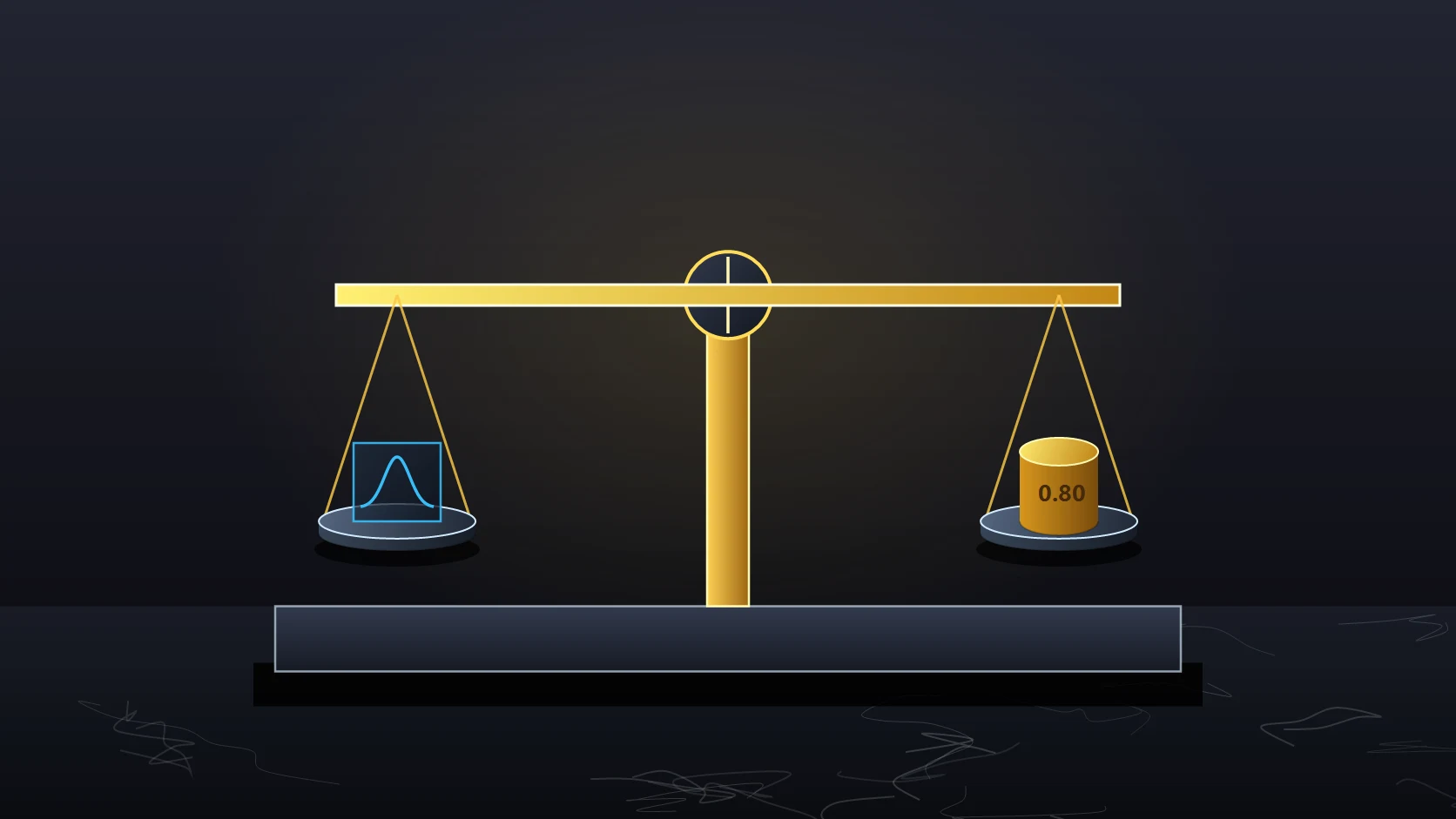
The Anatomy of Algorithmic Bias in Talent Operations
Algorithmic bias in workforce operations does not require malicious intent; it emerges naturally from mathematical optimization over historically skewed data and poorly formulated target variables:
THE PATHOLOGY OF UNCHECKED TALENT AI SCREENING
┌────────────────────────────────────────────────────────────────────────┐
│ HISTORICAL TRAINING DATA (Historical Skew)                             │
│ - Historical promotions & hiring decisions reflect past demographic    │
│   biases, traditional university preferences, and pedigree heuristics  │
├────────────────────────────────────────────────────────────────────────┤
│ THE PROXY LEAKAGE & OPTIMIZATION LOOP                                  │
│ ▲                                                                      │
│ █  FEATURE EXTRACTION: Model identifies proxy variables                │
│ █  (e.g., zip codes, sports participation, gap years, language syntax) │
│ █                                                                      │
│ █  ADVERSE IMPACT AMPLIFICATION: Model systematically penalizes        │
│ █  qualified underrepresented candidates to maximize historical match  │
│ ▼                                                                      │
├────────────────────────────────────────────────────────────────────────┤
│ COMPLIANCE & LEGAL EXPOSURE                                            │
│ - Violation of Title VII disparate impact standards                    │
│ - Failure of EU AI Act Annex III high-risk compliance mandates         │
│ - Reputational damage and loss of high-performing technical talent     │
└────────────────────────────────────────────────────────────────────────┘
The primary risk vectors in unmanaged talent AI include:
- Proxy Discrimination: Even when protected attributes (race, gender, age, disability) are explicitly excluded from training datasets, deep learning models readily infer them through correlated proxies such as extracurricular activities, attendance at gender-specific colleges, or subtle grammatical nuances.
- The Pseudo-Science Hazard (Emotion & Facial Analysis): Vendor claims that computer vision algorithms can accurately deduce candidate "emotional intelligence", "honesty", or "resilience" from video interviews have been thoroughly debunked by scientific consensus. Such systems measure superficial demographic, cultural, or neurodivergent traits rather than actual job competence.
- Automation Bias and Cognitive Abdication: Frontline recruiters operating under high volume quotas tend to accept algorithmic scores uncritically. The algorithm ceases to be an advisory tool and becomes a de facto automated rejection filter operating without meaningful human evaluation.
---
EVIDENCE: The Emerging Global Regulatory Landscape
Enterprise talent operations are governed by an increasingly stringent, multi-jurisdictional compliance architecture:
European Union: Regulation (EU) 2024/1689 (EU AI Act)
- High-Risk Classification (Annex III, Point 4): The EU AI Act explicitly designates AI systems intended for the recruitment or selection of natural persons (specifically to place targeted job advertisements, screen applications, or evaluate candidates) as High-Risk AI Systems.
- Statutory Requirements: Deployers and providers of high-risk talent AI must implement formal risk management systems (Article 9), ensure training datasets are subjected to rigorous data governance and bias examination (Article 10), provide transparent technical documentation (Article 11), enable automatic recording of system events and logs (Article 12), and engineer systems to enable effective natural person oversight (Article 14) to prevent automation bias.
- Prohibition on Workplace Emotion Recognition: Article 50 strictly prohibits the use of AI systems to infer emotions of natural persons in workplace and educational environments, rendering commercial video emotion analysis software unlawful within the EU.
United States: Federal and Municipal Enforcement
- EEOC Title VII Guidance: The U.S. Equal Employment Opportunity Commission has published technical assistance clarifying that employers using algorithmic decision-making tools are held legally accountable under Title VII of the Civil Rights Act of 1964 if the tool results in disparate impact (adverse impact) against protected classes, evaluated against the Uniform Guidelines on Employee Selection Procedures (the 80% / Four-Fifths Rule).
- New York City Local Law 144 of 2021: Regulates Automated Employment Decision Tools (AEDTs) used in hiring and promotion, mandating that covered systems undergo an independent annual bias audit measuring selection rates across race and gender categories, with summaries published publicly on corporate websites prior to system use.
India: Digital Personal Data Protection Act, 2023 (DPDP Act)
- Consent and Purpose Limitation: Mandates explicit candidate notice, verified consent mechanisms, and strict purpose limitation for candidate personal data processed during automated recruitment cycles, establishing substantial penalties for unauthorized processing or security breaches.
Regulatory Disclaimer: The information contained in this brief is provided for executive operational planning and governance purposes only and does not constitute formal legal advice. Organizations should consult qualified employment and technology legal counsel regarding compliance in their specific operating jurisdictions.
---
BHR CODE PERSPECTIVE • OPERATIONAL MODEL
The Governed Talent AI Evaluation Architecture
To ensure algorithmic fairness, regulatory compliance, and verified evaluation validity, BHR Code structures talent AI governance across four foundational operational pillars:
THE TALENT AI GOVERNANCE ARCHITECTURE
├── 01. MANDATORY PSEUDO-SCIENCE PURGE
│   └── Prohibit all video emotion recognition, facial expression analysis, and unvalidated voice profiling.
├── 02. CONTINUOUS DISPARATE IMPACT & BIAS AUDITING
│   └── Run automated statistical audits (e.g., Four-Fifths Rule, demographic parity) across all candidate cohorts.
├── 03. CALIBRATED CONFIDENCE TRIPWIRES
│   └── Require automated routing to human review for all edge cases, non-standard resumes, and low-confidence scores.
└── 04. IMMUTABLE DECISION LINEAGE & AUDIT LOGS
└── Maintain cryptographically tamper-evident logs of model inputs, feature weightings, and final human determinations.
1. Prohibiting Unvalidated Behavioral Tech
Enterprise talent leaders must immediately audit their HR software stack and permanently decommission tools utilizing facial micro-expression analysis, vocal pitch analysis, or generic gamified personality scoring. Evaluations must focus strictly on job-relevant technical competencies, verified problem-solving outputs, and documented operational achievements.
2. Pre-Deployment and Continuous Adverse Impact Audits
No AI evaluation model should be deployed to production without passing rigorous independent bias testing. Organizations must institute continuous monitoring that calculates selection ratios across demographic cohorts in real time. If an algorithmic filter exhibits adverse impact (a selection rate for any protected group below 80% of the highest group’s rate), the system must trigger an immediate operational freeze and architectural review.
3. Structured Human-in-the-Loop Architecture
Algorithmic tools must be strictly architected as advisory copilots, never as autonomous decision-makers. In high-stakes employment decisions (rejection, shortlisting, compensation benchmarking, performance evaluation):
- The algorithm may provide candidate synthesis and structured summarization.
- Rejection authority must reside exclusively with a qualified human recruiter or hiring manager.
- Recruiters must document the specific qualitative business rationale whenever confirming or overriding an algorithmic recommendation.
4. Candidate Transparency and Explanability
In alignment with modern privacy mandates, enterprises must provide candidates with clear disclosure that automated tools are being utilized in the evaluation process. Candidates should have the ability to request human review of an automated preliminary screen and access plain-language explanations of the specific job-related criteria used during assessment.
---
STRATEGIC OUTLOOK: Open-Box Auditable Talent Intelligence
Over the next 24 to 36 months, the market for black-box HR algorithms will consolidate as regulatory liabilities force enterprises toward transparent, auditable architectures.
The future of talent operations lies in Open-Box Skill Intelligence: deterministic systems that evaluate demonstrated code commits, architectural design portfolios, and structured domain problem-solving exercises rather than statistical pattern-matching over prose resumes. By grounding evaluation in objective technical work samples and transparent rubrics, enterprises can achieve significant operational efficiency while dramatically reducing compliance exposure.
---
Leadership Lenses: Practical Operational Guidance
For the Chief Human Resources Officer (CHRO)
- Mandate an immediate inventory of all AI and automated decision tools currently deployed across recruiting, onboarding, and performance management.
- Contractually require all HR software vendors to provide independent bias audit documentation and indemnify the enterprise against algorithmic discrimination claims.
For the Chief Compliance Officer & Legal Counsel
- Establish an AI Ethics and Compliance Review Board that must formally approve any algorithm utilized in employment decisions prior to procurement.
- Implement an automated logging policy ensuring all algorithmic scoring data, candidate inputs, and human review decisions are archived in tamper-evident storage for regulatory audit compliance.
For Heads of Talent Acquisition & Engineering Hiring
- Train recruitment teams on the cognitive dangers of automation bias; ensure recruiters treat algorithmic scores as supplementary reference data rather than definitive judgments.
- Re-center technical screening around standardized, peer-reviewed coding exercises and system design evaluations mapped directly to role requirements.
---